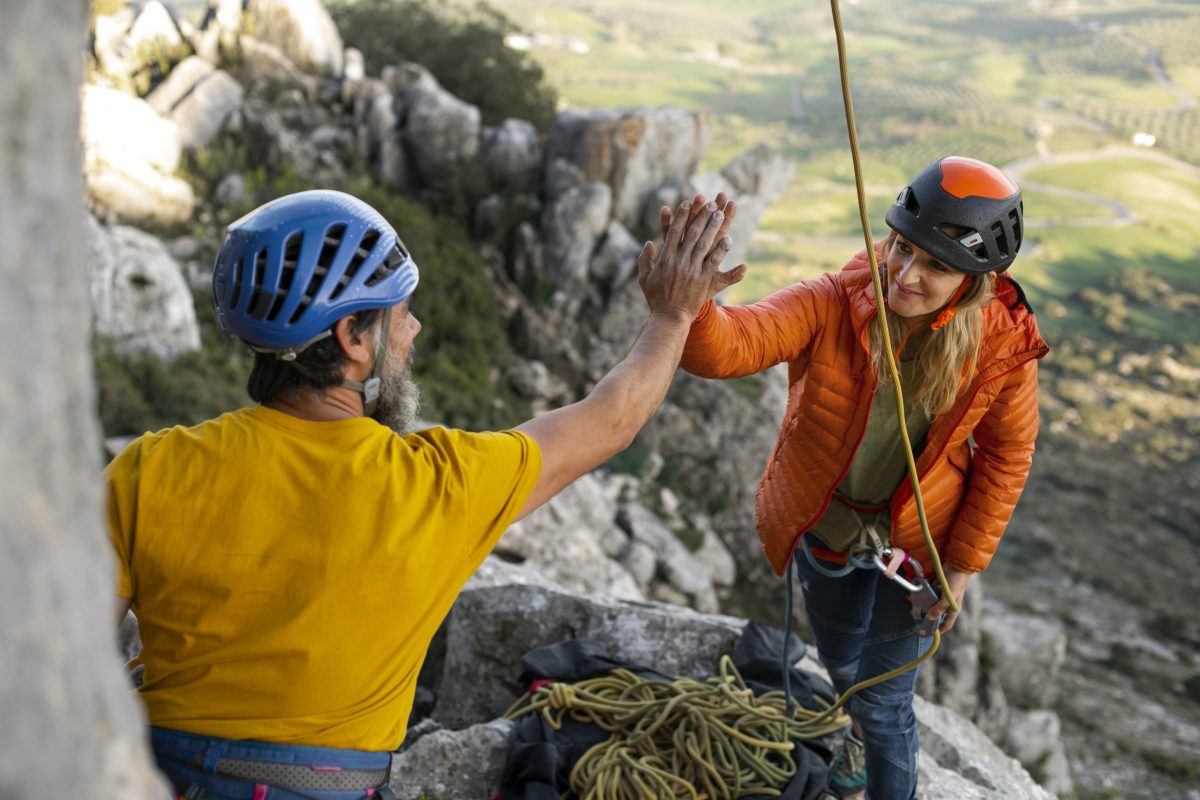




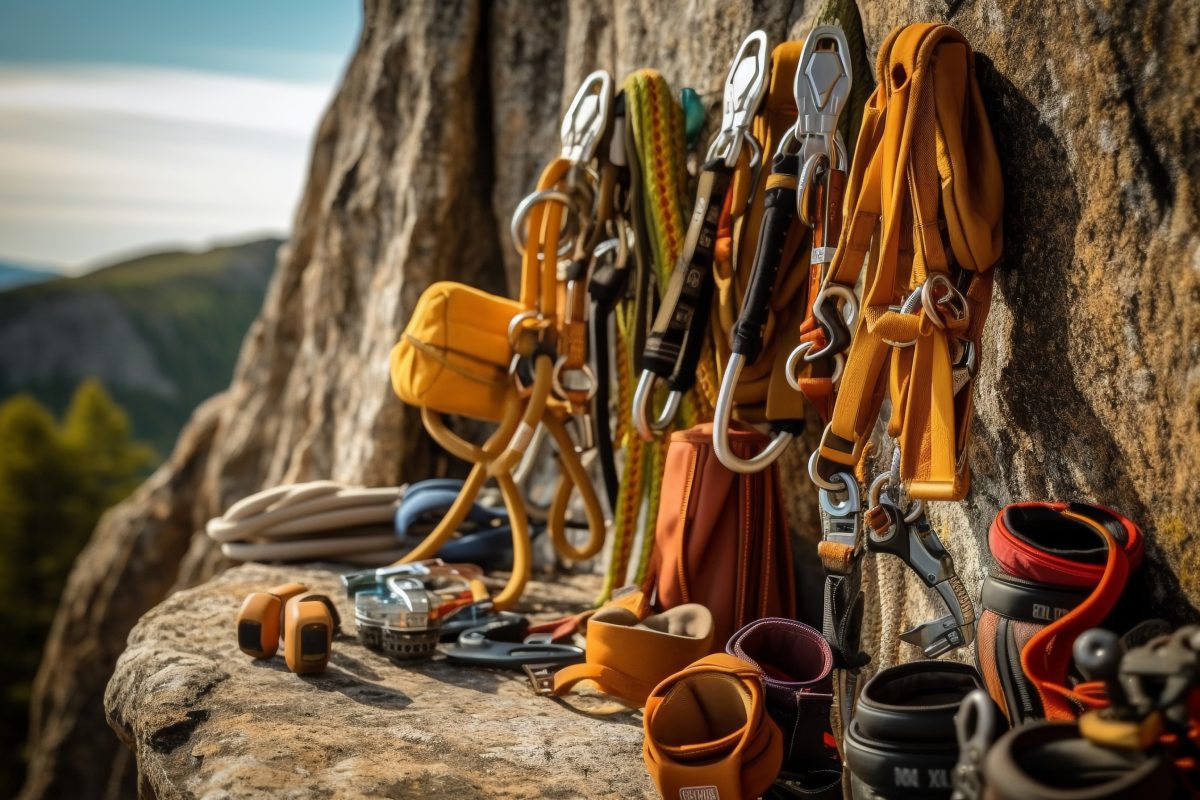
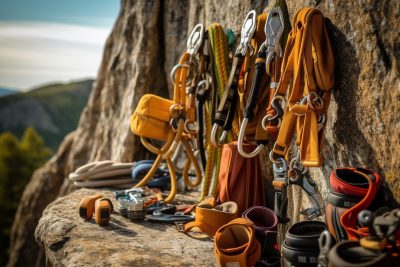
.jpg "Mountain, hiking and fitness safety rope for outdoor rock climbing sport protection with harness. Trekking adventure girl in nature with climber athlete gear for accident prevention in wilderness.")
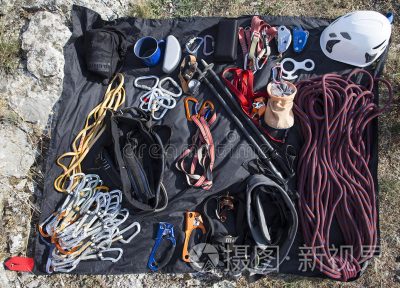
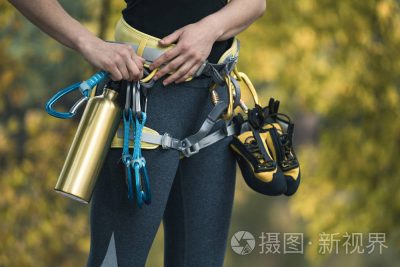
First Aid Skills: Managing a Fall Victim

In essence, falls are often sudden and unexpected. But you can still be prepared.
When someone falls heavily, the actions you take in the first few minutes can have a huge impact on their outcome and on the safety of everyone around you.
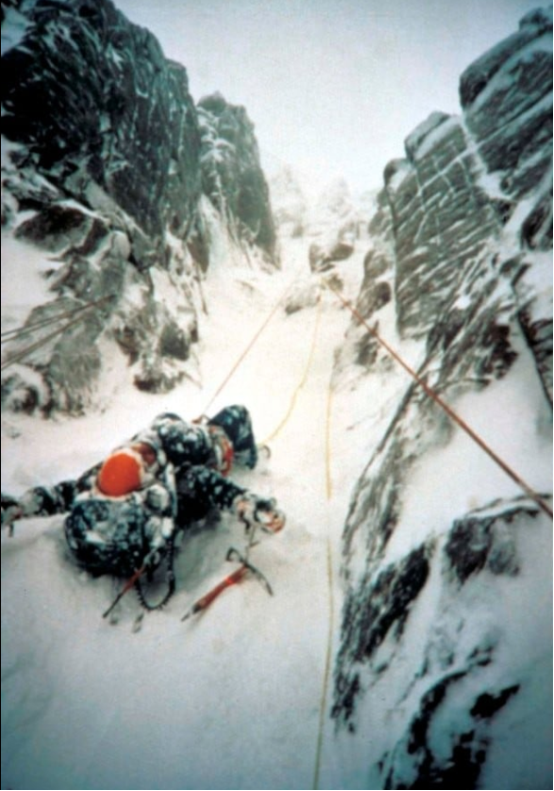
Accidents on rock or mountain terrain typically happen quickly—and unexpectedly.
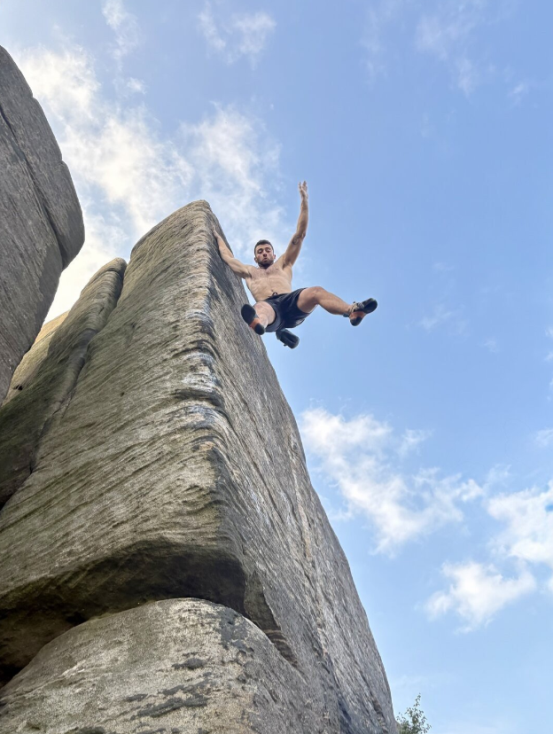
From a slip on a wet rock face, to a tumble while scrambling, or a serious incident involving a lead or solo climber.
when someone falls heavily, your actions in the initial minutes can significantly affect their outcome and the safety of the remaining party.
This article outlines how to manage a casualty immediately after a fall in the mountains, focusing on calm, safe, and effective first aid.
Step 1: Ensure Your Own and the Group’s Safety
Before rushing to help, pause and assess the surroundings.
Is the terrain still unstable?
Is there a risk of you or others falling?
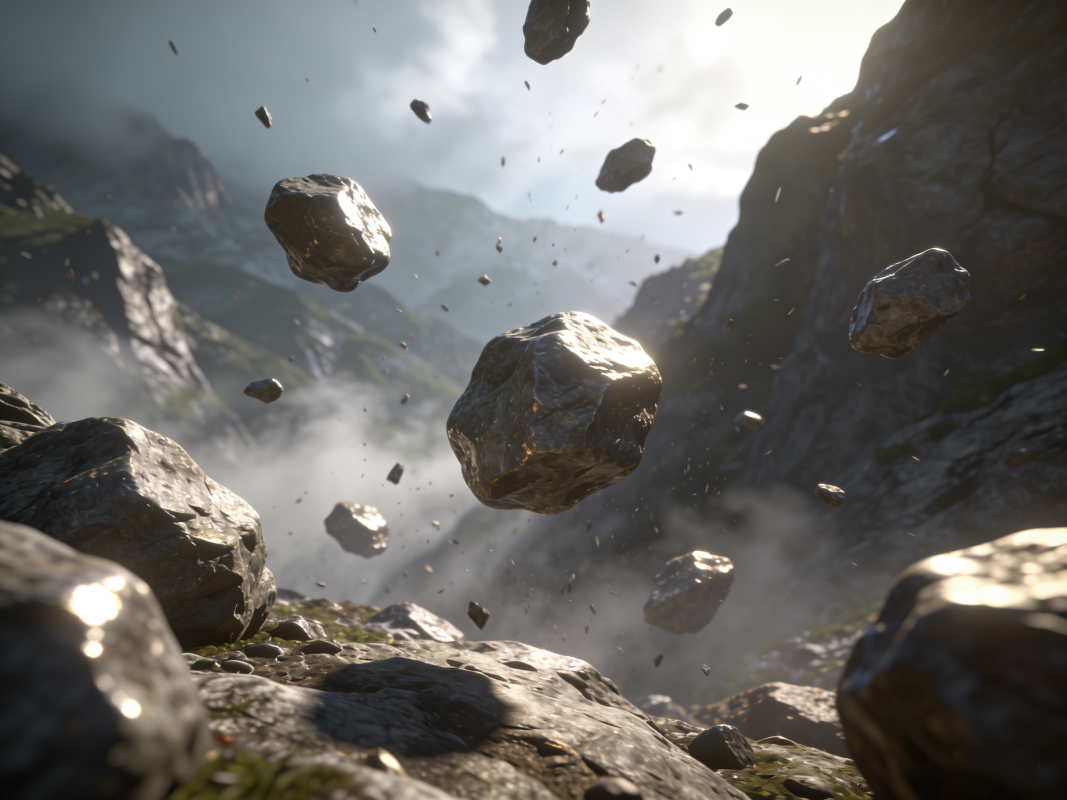
Do rockfall, avalanche, hard-frozen snow slopes, weather, or exposure add to the risk?
Ensure the scene is safe before approaching the casualty:
- Stabilize the area (e.g., move loose items, ropes, rocks)
- Warn others if it’s a hazardous zone
- Use helmets, ropes, or shelter as needed
If the situation is unsafe and cannot be stabilized, do not become a secondary victim.
This applies on steep slopes, cliffs, river crossings, or avalanche-prone slopes.
Step 2: Approach and Assess Responsiveness
When safe to do so, approach the casualty and talk to them:
- “Are you okay?”
- “Can you hear me?”
- “Where does it hurt?”
If they are responsive, tell them not to move. Let them tell you where the pain is before assisting.
If they are unresponsive, follow the primary survey process. The standard ABC mnemonic is helpful:
- Airway – Is the airway clear? Does it need clearing or repositioning?
- Breathing – Are they breathing normally?
- Circulation – Is there significant bleeding?
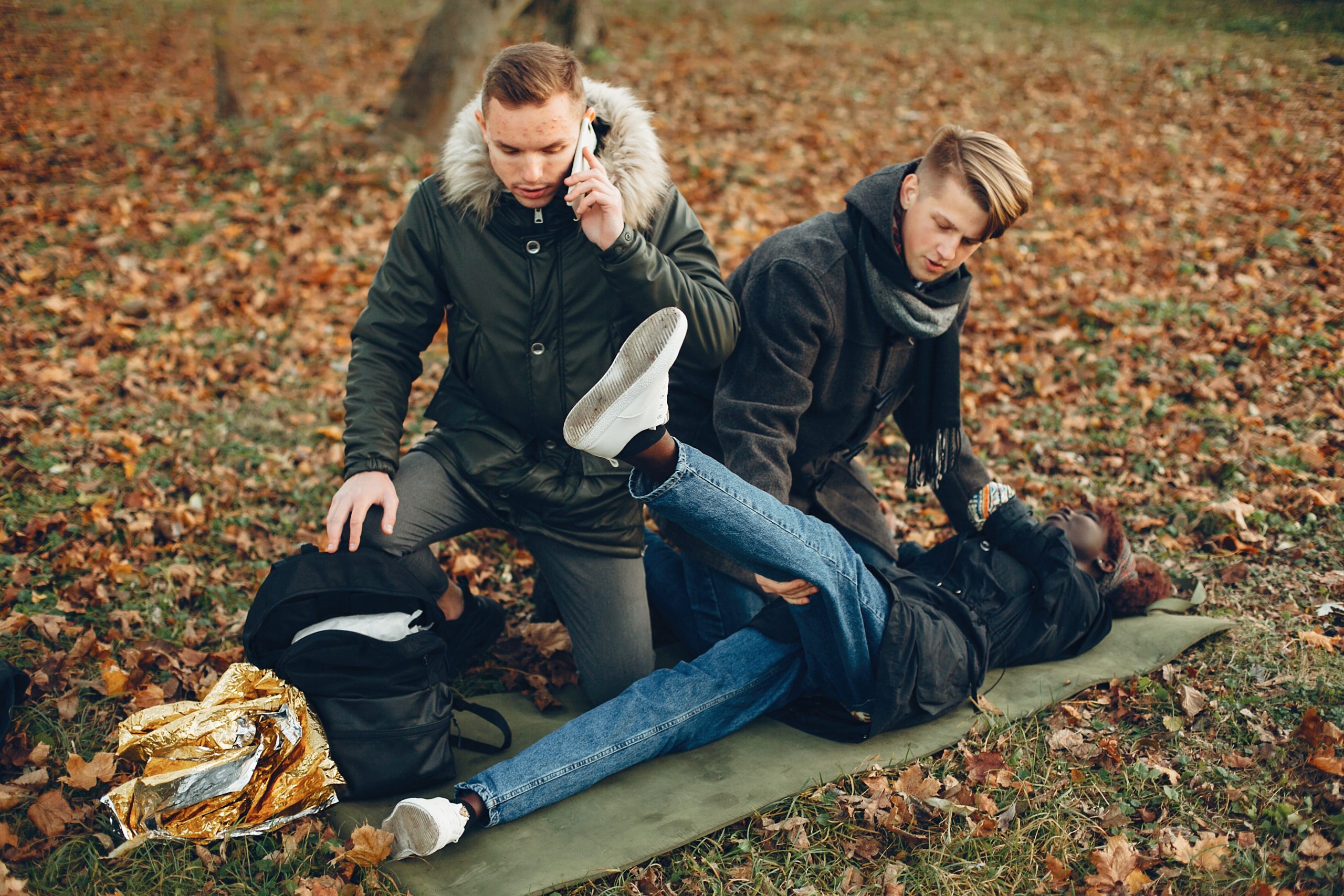
If the casualty is not breathing, start CPR immediately and call emergency services.
Step 3: Control Bleeding and Manage Immediate Injuries
Once you have ruled out (or managed) life-threatening airway or breathing problems, check for severe bleeding or obvious trauma.
- Apply direct pressure to the wound
- Use a sterile dressing or an improvised substitute like a T-shirt or scarf
- Elevate the limb if appropriate, unless you suspect a fracture
Do not be distracted by dramatic-looking injuries; always address the most life-threatening problems first.
Step 4: Immobilize the Casualty and Prevent Further Injury
Falls in the mountains often involve suspected fractures, head injuries, or spinal injuries.
If in doubt, assume a spinal injury and minimize movement:
- Encourage the casualty to keep still
- Support the head and neck if necessary
- Do not attempt to move them unless absolutely essential.
If they are in a safe location and there is no immediate danger, your goal is to prevent further injury until help arrives.
Step 5: Keep Them Warm and Provide Reassurance
After a fall, a casualty can deteriorate rapidly—not only from their injuries but also from shock and cold.
Even in summer, lying still on the ground can lead to rapid heat loss.
Do the following:
- Place insulation between the casualty and the ground (e.g., foam mat, backpack)
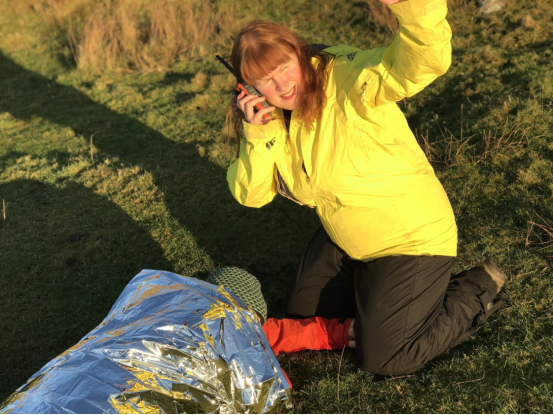
- Wrap them in jackets, a group shelter, survival bag, or bivvy bag.
- Offer reassurance and remain calm—your tone sets the atmosphere
- Monitor breathing, pulse, and responsiveness regularly
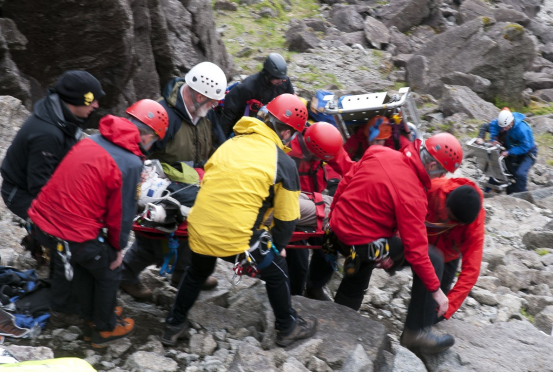
Step 6: Decide on Evacuation or Calling for Help
Not all falls require a call to mountain rescue, but some definitely do.
Base your judgement on:
- The casualty’s level of consciousness
- Their ability to walk or move safely
- Suspected serious injury (e.g., spine, pelvis, head, internal bleeding)
- Weather, terrain, and your distance from help
If unsure—call early. Mountain rescue teams would rather be called out and stood down than called out too late.
When calling 999 or 112:
- Ask for Police then Mountain Rescue
- Provide an accurate location (grid reference or What3Words)
- Explain the nature of the fall, injuries, and terrain
Aftermath: Debrief and Record
After any incident:
- Record what happened, what treatment was given, and what decisions were made.
- Debrief the team—provide reassurance, clarification, and process the event
- Encourage the casualty to seek a medical check-up, even if they can walk away.