




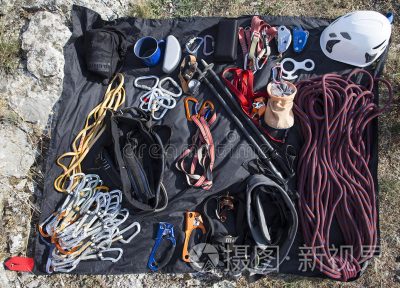
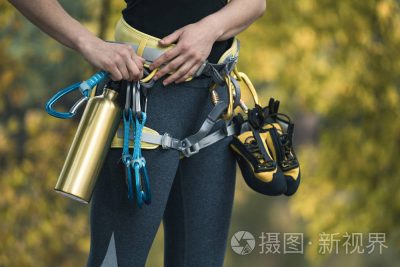
.jpg "Mountain, hiking and fitness safety rope for outdoor rock climbing sport protection with harness. Trekking adventure girl in nature with climber athlete gear for accident prevention in wilderness.")





Optimized and Enhanced Edition: Ten Tips to Improve Your Climbing Grade

Introduction
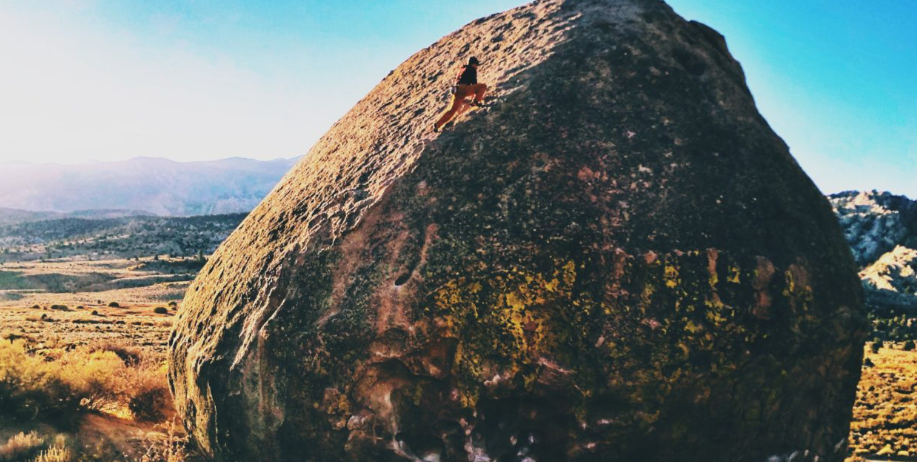
Bouldering is widely regarded as one of the purest and most fundamental forms of climbing. Its appeal lies in the ease with which you can practice indoors or outdoors, enjoying the thrill of climbing without the need for complex gear.
At the same time, bouldering is an effective training method for enhancing strength, technique, and movement control. It serves as an excellent supplement to various other forms of climbing, such as sport climbing and traditional climbing.
Whether you are an experienced climber facing a grade plateau or an enthusiast looking to systematically improve your bouldering skills, the ten practical tips provided in this article will guide you toward a breakthrough. If you are new to the sport, we recommend first consulting our beginner’s guide.
1. Train with Climbers Who Are Stronger Than You
Although climbing with friends who far surpass your skill level can occasionally bring psychological pressure, it is an effective way to improve quickly. More experienced climbers can not only demonstrate proper technique but also analyze the details of your movements from different perspectives.
If you are familiar with each other, recording and reviewing climbing videos can be an extremely valuable learning method—you may be surprised to discover how climbers of different body types and styles approach problems in such diverse ways.
Even more surprisingly, they might also draw inspiration from your beta.
2. Maintain Diversity in Your Training
Many people instinctively choose routes that suit their strengths—for example, those with strong upper bodies prefer steep routes with large holds, while technically skilled climbers often gravitate toward slabs. However, to become a well-rounded climber, you must gain experience on routes with various angles and types of holds.
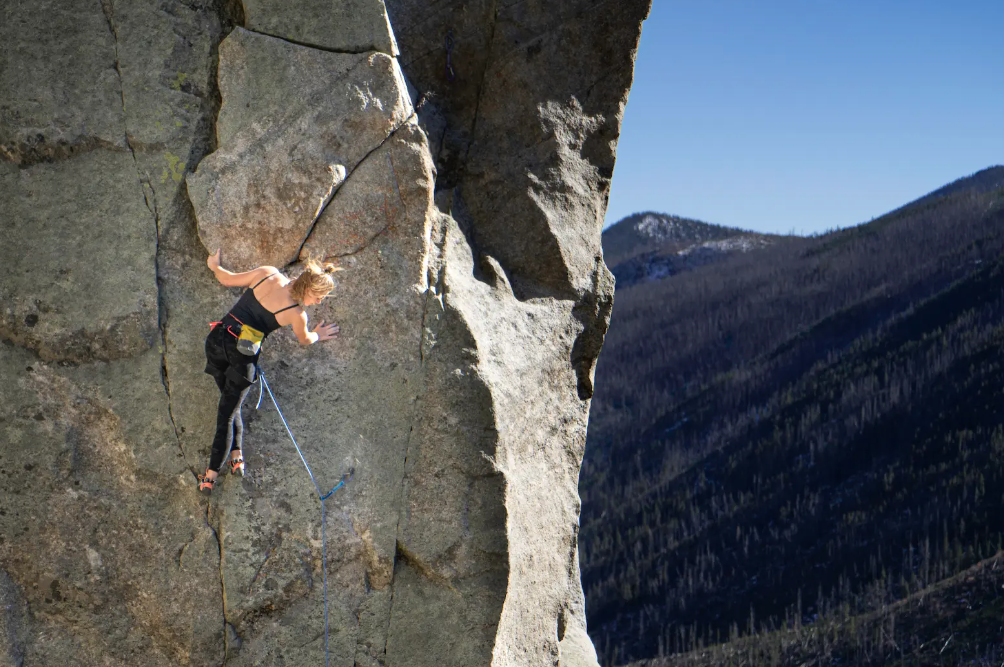
This is especially important if you are passionate about outdoor climbing. Try different crags and rock types such as granite, sandstone, and limestone to expand your movement vocabulary and adaptability.
In daily training, consciously select routes that challenge your weaknesses—from dynamic to static movements, from slopers to crimps. Diverse attempts are what truly lead to progress.
3. Focus on Precision and Power in Footwork
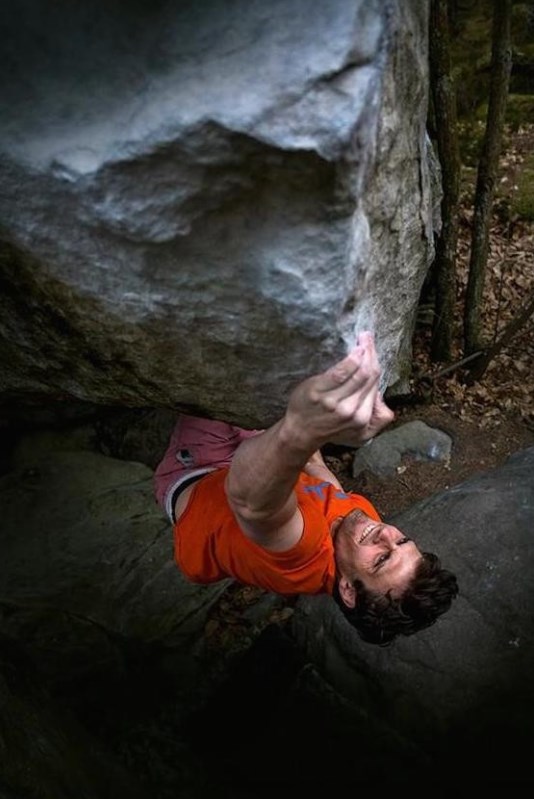
Many climbers tend to overlook footwork, but it is actually the key to saving energy, maintaining balance, and controlling body position.
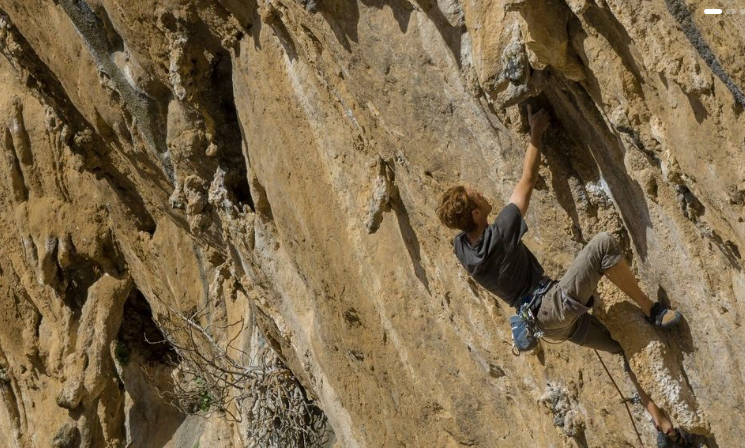
Learning to place your toes precisely and apply force actively allows you to better utilize leg strength, rotate your hips, and thereby expand your range of motion while reducing the burden on your arms. This is particularly crucial in outdoor climbing.
During warm-up, choose easy routes and consciously practice applying pressure on different footholds. Feel how generating force through your feet helps maintain body balance.
4. Be Creative and Set Your Own Routes
In addition to climbing preset routes, try creating your own problems. Combine different movements to design exercises that target your weaknesses.
For example, if your local gym tends to set large, dynamic routes, you can design a sequence that requires small, static movements and controlled footwork.
This kind of customized training not only helps you overcome shortcomings but also adds fun, especially when done with friends.
Moreover, participating in fun competitions held at local gyms is a great opportunity to stimulate creativity and observe diverse styles.

5. Incorporate Dynamics and Momentum Control
Bouldering generally emphasizes explosiveness and power more than roped climbing, but many people mistakenly equate “dynamic” with blindly jumping.
In reality, what’s more essential is the mastery of momentum—how to use body swing and center-of-gravity control to connect holds in the smoothest way possible. Beginners can practice swinging to the next hold on an overhanging wall, keeping arms slightly bent and using the hips to guide the movement.
Try viewing an entire route as a continuous flow of movement rather than isolated bursts of power. Consider how each ending position affects subsequent moves. This not only improves efficiency but also conserves energy.
6. Enhance Flexibility and Hip Mobility
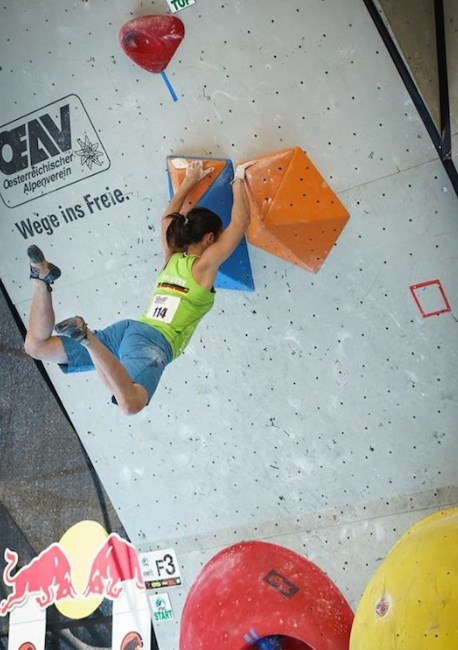
Many climbers are limited by stiffness in the hips and glutes, making it difficult to perform high steps, lunges, or bridging moves.
Improving flexibility not only helps you reach high footholds more easily but also allows you to adjust your body position on the wall more comfortably. Beyond injury prevention, good flexibility enhances movement efficiency.
Incorporate dynamic stretches targeting the glutes, hips, and legs before and after climbing, avoiding static stretching when muscles are cold. Refer to relevant training guides to develop a flexibility plan suited for climbers.
7. Systematically Read Routes
Skilled climbers often “climb” the route in their minds before even starting. Take time to observe the size and angle of the holds, the sequence direction, envision possible movement combinations, and identify spots where heel hooks, knee bars, or other techniques can be used.
You can even sketch a simple diagram of the holds and mark movement directions to reinforce memory and understanding. Practice route-reading repeatedly until it becomes second nature. This will help you find optimal solutions more quickly during actual climbs and reduce unnecessary energy expenditure.

8. Set Project Routes and Work on Them Systematically
In well-equipped climbing gyms, it’s easy to fall into the comfort zone of “climbing all the easy routes.” But to truly improve your grade, you must strategically attempt routes slightly above your current ability.
We recommend selecting three to four “project routes” each week. Dedicate time to repeated attempts, experiment with different sequences, seek beta from others, and continue until you find the most efficient solution. This strategy also applies to outdoor climbing—focus on one or two challenging problems and persist until you send them.
9. Refine Your Warm-Up Routine for Outdoor Climbing
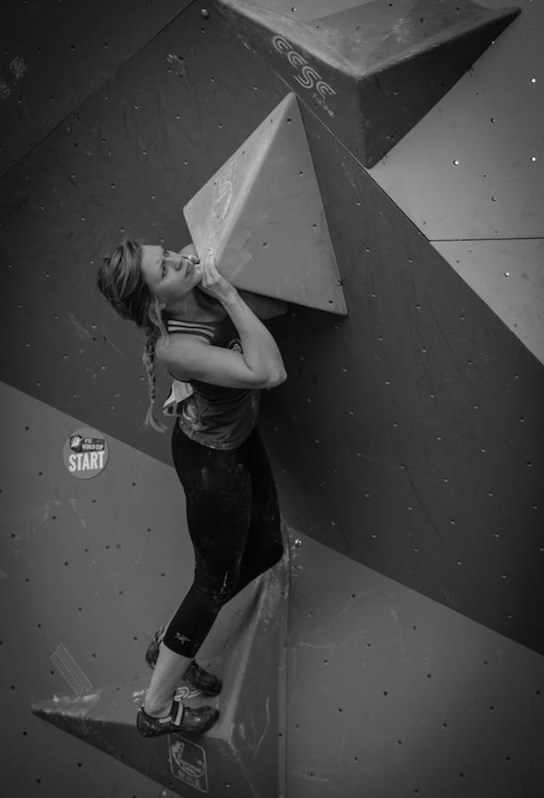
The outdoor environment is entirely different from the indoors. Crags have a more natural distribution of difficulty, with fewer easy routes, making warming up particularly important.
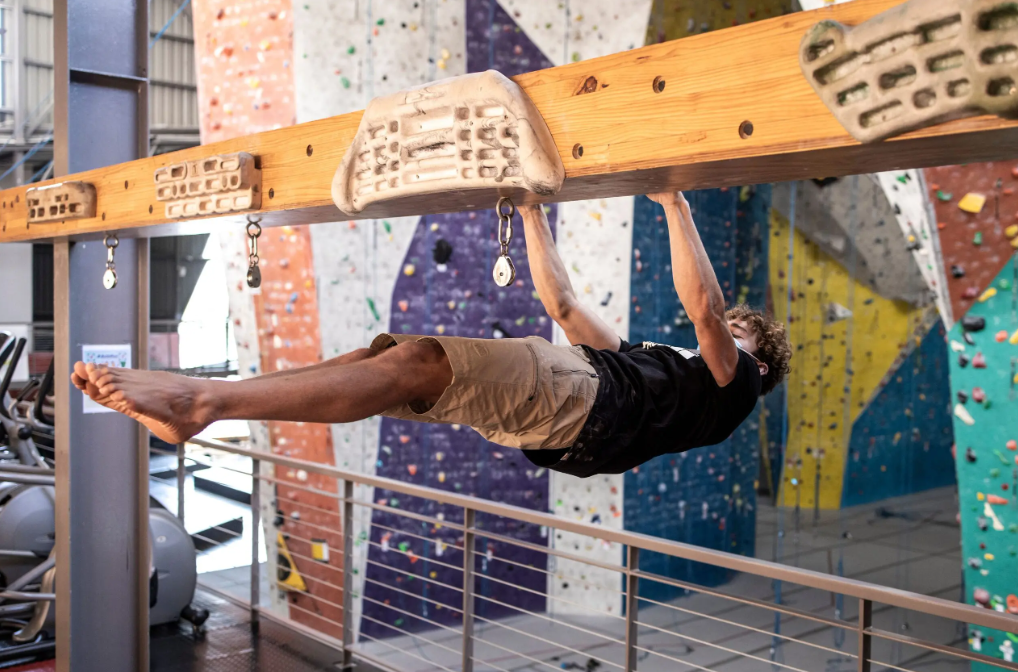
Customize your warm-up routine based on personal needs: start with jogging or brisk walking to increase heart rate and body temperature, followed by dynamic stretching. Then begin with very easy routes, gradually increasing intensity and range of motion. Portable fingerboards and resistance bands can be used to activate fingers and the upper body.
Remember to avoid attempting limit moves when fatigued, and plan your climbing pace wisely.
10. Build Confidence and Master Safe Falling Techniques
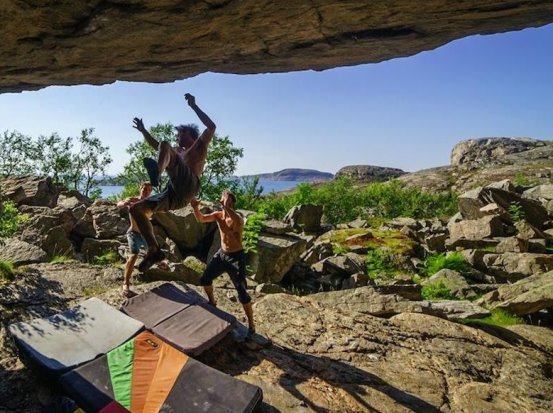
Outdoor bouldering lacks the large, soft mats found in gyms—usually, only several portable crash pads are available. Therefore, landing safely is crucial.
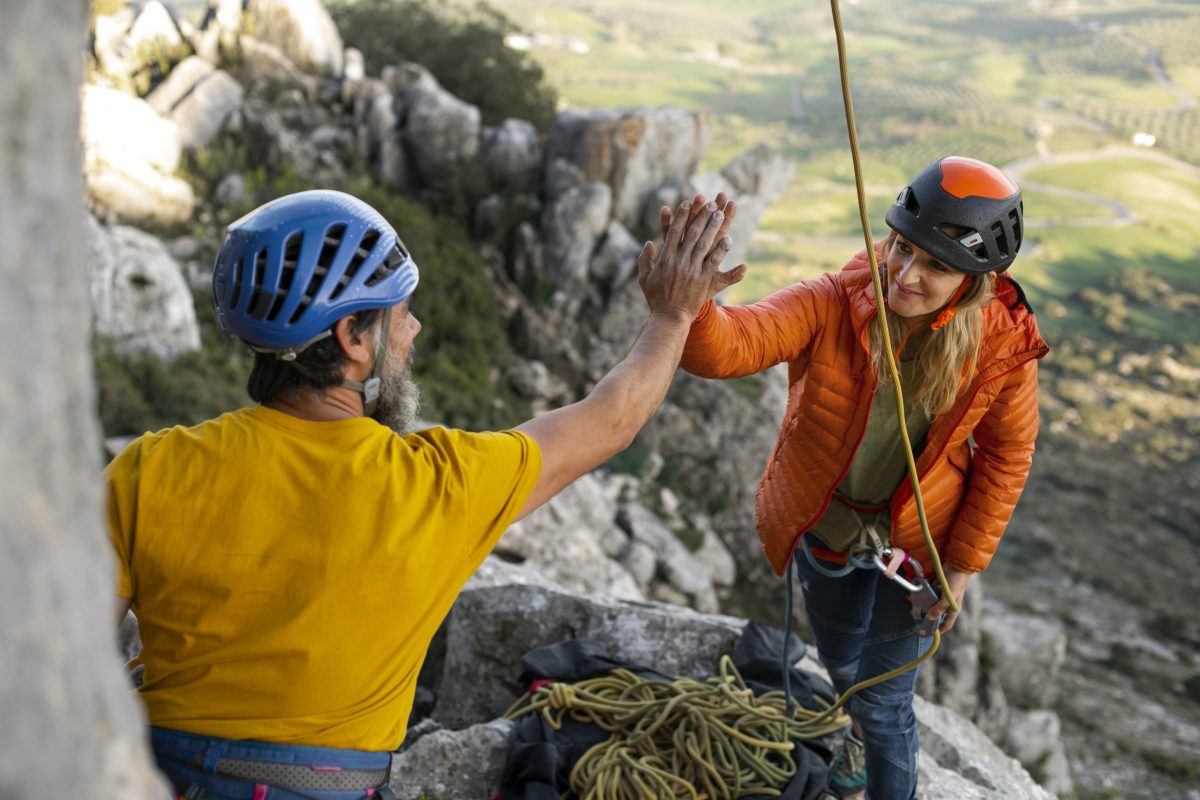
Arrange crash pads properly to cover the landing zone, avoiding rocks and roots. When visiting an unfamiliar crag for the first time, it’s best to go with partners, especially under the guidance of experienced climbers.
Learn basic “spotting” techniques—the goal is not to catch the climber but to lightly support their lower back to help them maintain an upright landing posture, preventing head or neck impacts or falling outside the pads.
Conclusion
Bouldering is not merely a physical activity; it is a “vertical art” that integrates strength, technique, intelligence, and mental fortitude.
It encourages us to keep trying and challenging ourselves, granting a sense of achievement with every small breakthrough.
Maintain an exploratory and playful mindset, and enjoy the pleasure of thinking and moving on the wall—that is the most captivating aspect of climbing.